
Workable covering
Neighboring shingles must be workable and the replacement material compatible. A brittle roof can crack as the repair is opened. A membrane needs a surface that will accept its specified patch or weld.

Free roof inspections in Mission, Kansas
A small roof opening can send water well beyond the damaged spot. Get help finding the entry point and repairing the detail that let rain through.
A lifted shingle, split pipe boot or separated wall flashing can interrupt an otherwise serviceable roof. The repair starts by tracing the water path and examining the surrounding materials. Water can follow sheathing, framing or underlayment before it reaches the ceiling, so the stain is a clue rather than a map of the opening.
Shingle replacement involves lifting adjoining courses, removing damaged pieces and restoring fasteners and overlaps. A pipe boot repair restores the seal around the penetration and its connection to the shingles. Step flashing follows each course along a wall; counterflashing protects its upper edge. Rebuilding those joints is different from spreading sealant over them.
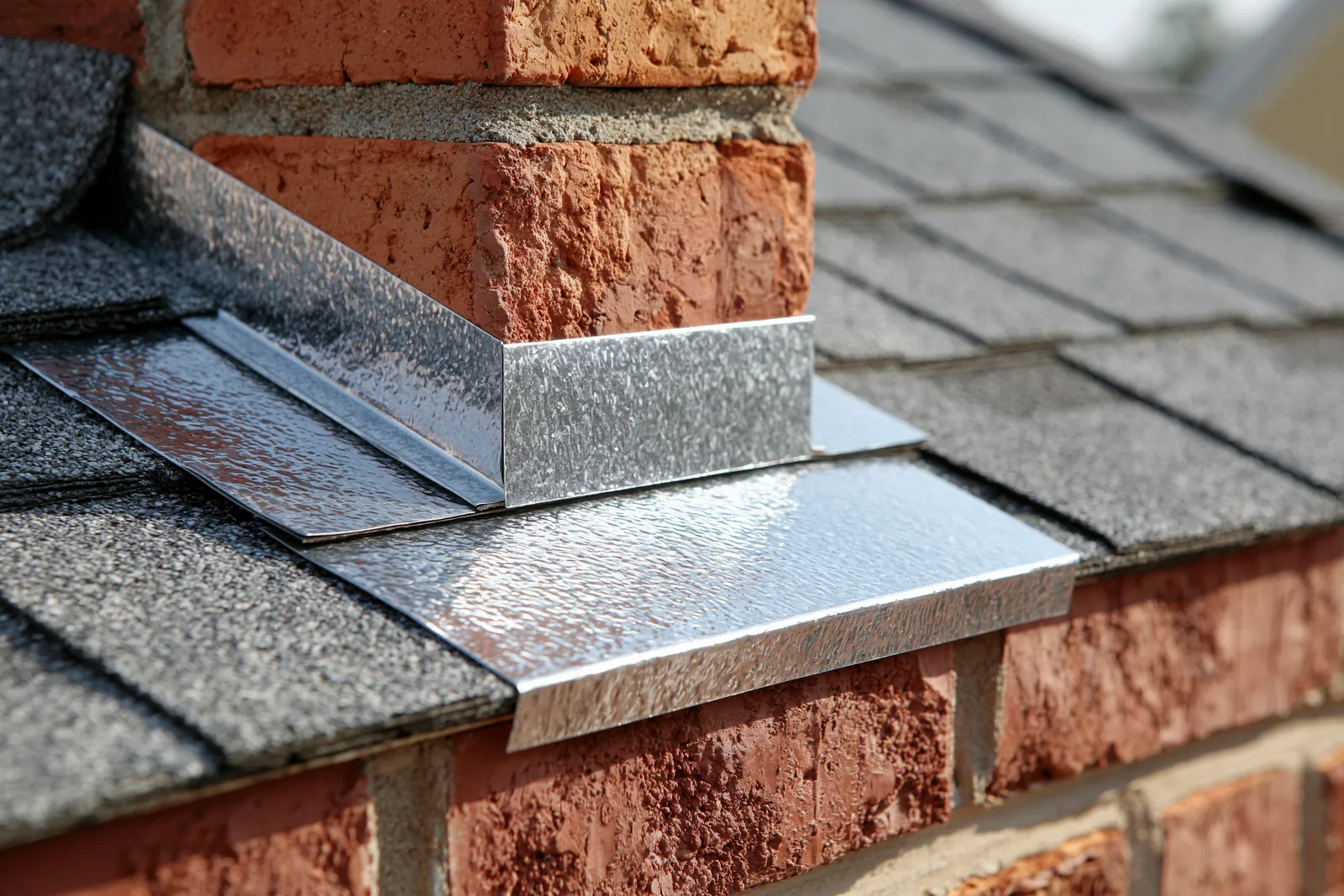
Neighboring shingles must be workable and the replacement material compatible. A brittle roof can crack as the repair is opened. A membrane needs a surface that will accept its specified patch or weld.
The deck must hold the new fasteners. Wet or deteriorated decking needs its own correction. When failures are spread across the roof, isolated patches do not renew the covering between them.
Access, height and slope affect the work even when the opening is small. An exposed shingle patch differs from a chimney joint with several flashing layers. Hidden deck damage and material availability change the repair once the area is opened.
Repair pricing follows the actual detail and surrounding condition rather than a house-size formula. Tell us where you see water or loose material; the roofer handles the diagnosis. Explore leak repair
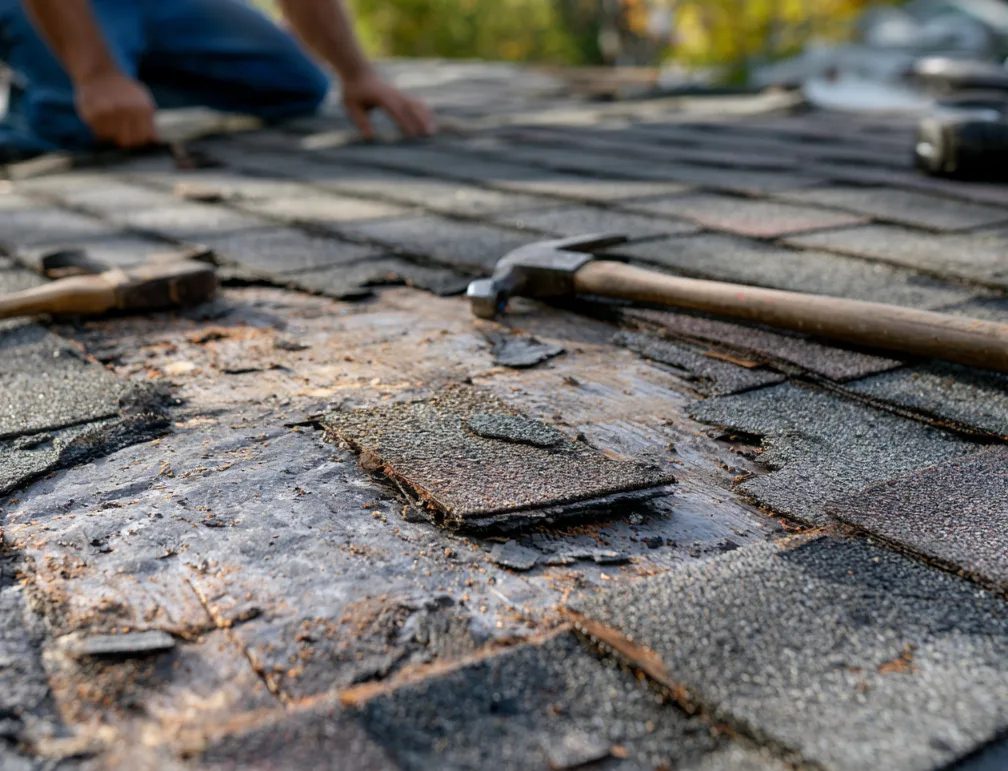
The roofer follows the symptoms and examines the covering, connections and supporting materials around the failure.
The affected area is opened to sound material. New covering or flashing is connected in the proper water-shedding order. Hidden wet or damaged material changes the repair boundary.
Removed material and debris are collected. The repaired area returns to service, while unrelated wear elsewhere remains part of the roof’s ongoing condition.
Yes, when the opening is localized and the surrounding covering, deck and connections support a lasting repair. Widespread wear changes that answer.
No. Water can move along roof layers or framing before it reaches the ceiling. Tracing that path helps keep the repair focused on the actual entry.
Sealant has a role in compatible details, but separated or failed flashing needs the joint restored. A surface bead does not rebuild the layers beneath it.
Tell us where the roof is and what you noticed. Start with a free inspection and talk through the work the roof needs.